


Shift-left testing moves testing earlier in the SDLC so defects are cheaper to fix. Learn what it means, where it came from, its key elements and challenges, how it differs from continuous testing, and how to apply it.
As the demand to release quality software products in a short amount of time continues to accelerate, Agile and DevOps teams have to adopt new approaches to avoid falling behind.
Shift-left testing is one of the most effective answers. In this blog, we walk you through the concept, its benefits, and how to implement it in your software development life cycle (SDLC).
What Is Shift-Left Testing in DevOps?
Shift-left testing is a software testing approach that moves testing activities to earlier development stages rather than leaving them until the very end. It is a proactive approach based on the idea that the earlier defects are identified and resolved, the lower the cost and effort required to fix them.
Origin of Shift-Left Testing
Shift-left testing emerged as a response to the inefficiencies and high costs of traditional software testing, where testing was often done late in the development lifecycle. The term is generally credited to Larry Smith, who described it in 2001.
In the past, testing was separated from development. Software was only tested once it was fully developed, so testers didn’t have enough time to test, and when bugs were found, developers had to spend a large part of their bandwidth troubleshooting them.
Thus, shift-left testing was born.
Shift-left testing promotes simultaneous development and testing. Instead of waiting until the code is "done," testing happens in parallel with coding, or even before coding, in the form of test design during requirements gathering.
This creates an environment where:
- Feedback is immediate
- Code evolves with quality in mind
- Defects don’t get buried or ignored
Key Elements of Shift-Left Testing
1. Early Testing
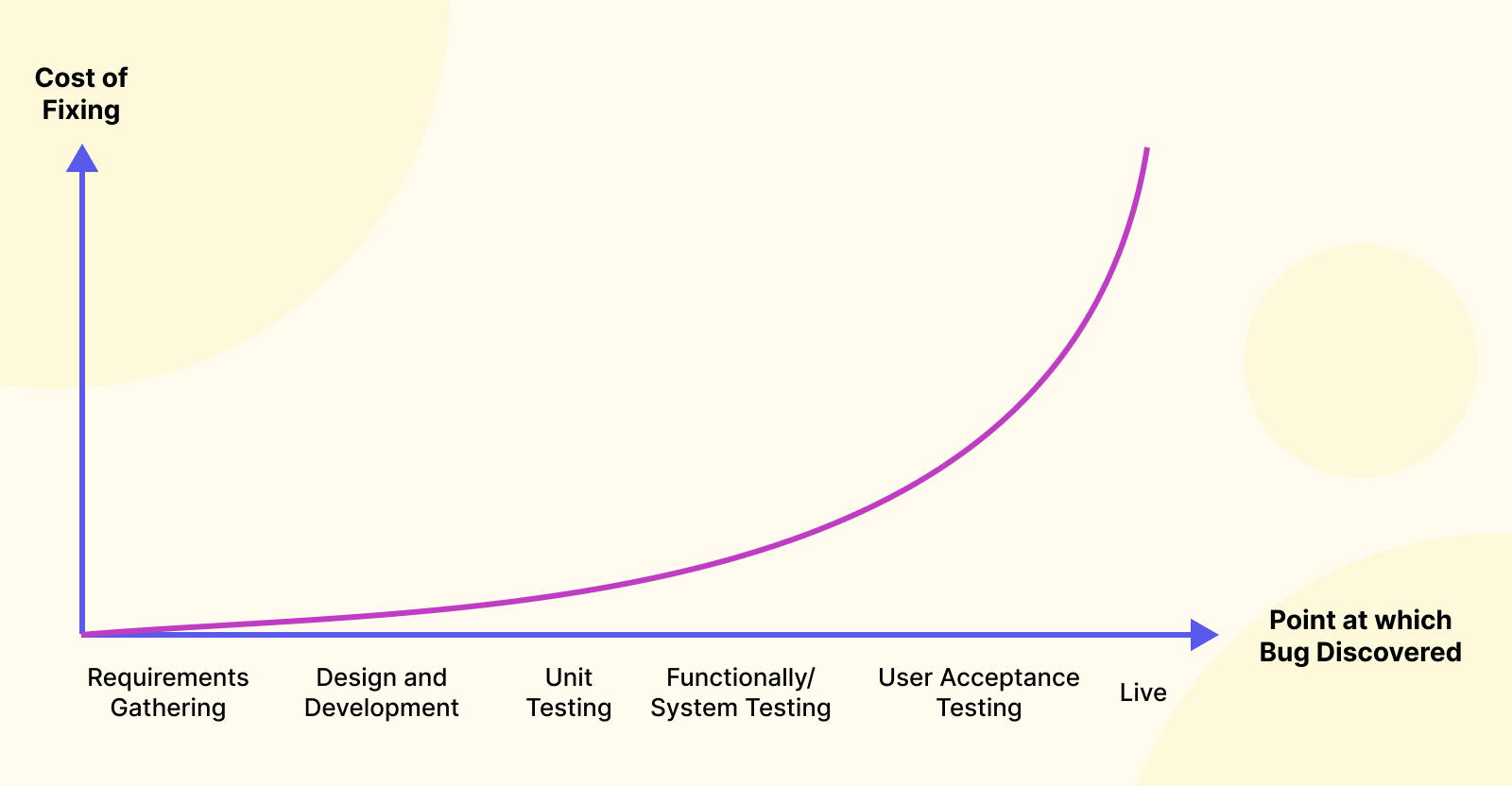
Testing begins at the requirement and design phase, not just after development.
With shift-left testing, testers, developers, and stakeholders collaborate early to prevent defects rather than just detecting them. Preventing defects is quality assurance and detecting them is quality control, and our guide explains the difference between QA and QC. A test-first approach, such as test-driven development (TDD) and behavior-driven development (BDD), helps ensure quality from the start.
Read More: TDD vs BDD: What Are The Differences?
2. Automation and Continuous Testing
Automating tests early allows frequent and reliable validation. Tools like Selenium, Katalon, and Cypress help execute tests continuously in CI/CD pipelines. Automated unit, API, and integration tests catch issues before they escalate, making early defect detection more efficient.
Read More: What is Automation Testing? How To Automate Tests Effectively?
3. Static Code Analysis and Early Defect Detection
Static code analysis tools like SonarQube, ESLint, and Checkstyle help developers catch issues before runtime, and QA teams can apply static code analysis in Katalon to their test scripts too. This reduces technical debt, improves code quality, and saves time and costs compared to late-stage debugging.
4. Collaboration Between Teams
Effective communication between developers, testers, and business teams is essential. Aligning early on testing goals, tools, and strategies creates a shared responsibility for quality. This ensures testing is an integral part of development rather than an afterthought.
Challenges of Shift-Left Testing
1. Transition Planning
A structured transition plan helps both QA and development teams understand the changes shift left testing introduces. Since testing becomes a shared responsibility, existing workflows and structures need to be adjusted to support closer collaboration between teams.
2. Test Planning
Testing is no longer a separate, sequential phase but an ongoing process integrated into development. Teams must establish continuous communication and feedback loops to align testing efforts with development from the start.
3. Project Management
Project managers must adapt their processes to incorporate shift left testing and align it with DevOps best practices. Beyond managing workflows, they play a key role in fostering a quality-first culture and ensuring the transition is smooth from both a technical and organizational perspective.
4. Integrating Automation
Automation is essential in shift left testing, but many QA teams lack expertise in automated testing. Writing and maintaining test scripts requires programming skills, and as software evolves, keeping these scripts updated can be resource-intensive, especially at scale.
5. Support for Developers
Developers may resist additional testing responsibilities, but testability is simply an extension of good coding practices. Testers can support developers by guiding them in writing clean, maintainable, and testable code, which leads to a smoother testing process.
6. Communication Silos
Limited interaction between QA and development teams has traditionally led to misalignment and inefficiencies. Tools like Jira can help bridge the gap, but since they aren’t specifically designed for testing, additional integrations may be needed to create a more tester-friendly system.
What Is Continuous Testing in DevOps?
Continuous testing runs tests frequently throughout development, ensuring faster bug detection and higher release quality. It creates a constant feedback loop, allowing developers to fix issues early before production.
A key part of Shift-Left Testing, continuous testing helps catch defects sooner, reducing costly fixes later. It heavily relies on automation, especially in large projects, to streamline iterative testing.
Shift-Left Testing vs. Continuous Testing
Have a look at this table to understand the differences in 2 approaches:
Aspect | Shift-left Testing | Continuous Testing |
Definition | Testing activities are moved earlier in the software development lifecycle (SDLC). | Automated tests are executed continuously throughout the SDLC. |
Goal | Identify and address defects early in the development process. | Provide immediate feedback on the quality of the software. |
Techniques | Unit testing, code reviews, static analysis, early integration testing. | Automated unit tests, integration tests, functional tests, etc. |
Focus | Early defect detection and prevention. | Ongoing quality assurance and feedback. |
Benefits | Reduced cost of fixing issues, shorter feedback loop, faster delivery. | Maintains high confidence in software quality, faster release cycles. |
Integration | Integrated into the beginning or middle stages of the SDLC. | Integral part of the continuous integration and delivery pipeline. |
How to Apply Shift-Left Testing in Continuous Testing

1. Involve Testers Early in Planning
Bringing testers into the planning phase allows them to identify ambiguous requirements, suggest testing scenarios, and ensure the design is testable from the start. Early collaboration prevents unnecessary back-and-forth later in development.
Testers can also advise developers on writing test-friendly code. For instance, they may recommend using mocks and substitutes for unready software modules, making integration testing smoother.
2. Define Quality Standards and Build a Quality-First Culture
Successful shift left testing requires clear quality expectations shared across teams. Developers and testers should be aligned on best practices, technical capabilities, and available testing tools.
Creating a culture of quality involves ongoing training, investment in testing tools, and ensuring that quality is a shared responsibility rather than just the QA team's concern.
3. Implement BDD for Better Collaboration
Behavior-driven development (BDD) fosters collaboration between technical and non-technical stakeholders. It allows developers, testers, and managers to define test scenarios in plain language, ensuring everyone understands software requirements.
With Jira integration, teams can pull requirements directly into BDD files, enabling testers to write test cases while development is ongoing. This reduces waiting time and allows faster defect resolution, making testing more efficient.
4. Adopt Automation Testing Strategically
Automation is essential in shift left testing, but teams must decide whether to build or buy automation tools.
- Building with open-source frameworks like Selenium provides flexibility but requires coding expertise and ongoing maintenance.
- Buying commercial automation tools offers a pre-built solution tailored to testing best practices, reducing the need for technical expertise.
How to Perform Shift-Left Testing With Katalon

Katalon is a comprehensive test automation solution and quality management platform for web, mobile, API, and desktop applications. It provides a unified platform for teams to plan, design, execute, and manage automated testing efforts.
Katalon supports all 4 key elements of shift-left testing. Early testing and continuous integration/continuous delivery are easy to achieve through integrations with popular CI/CD tools and collaboration tools such as Slack, Microsoft Teams, and Git, bringing transparency and better communication between team members.
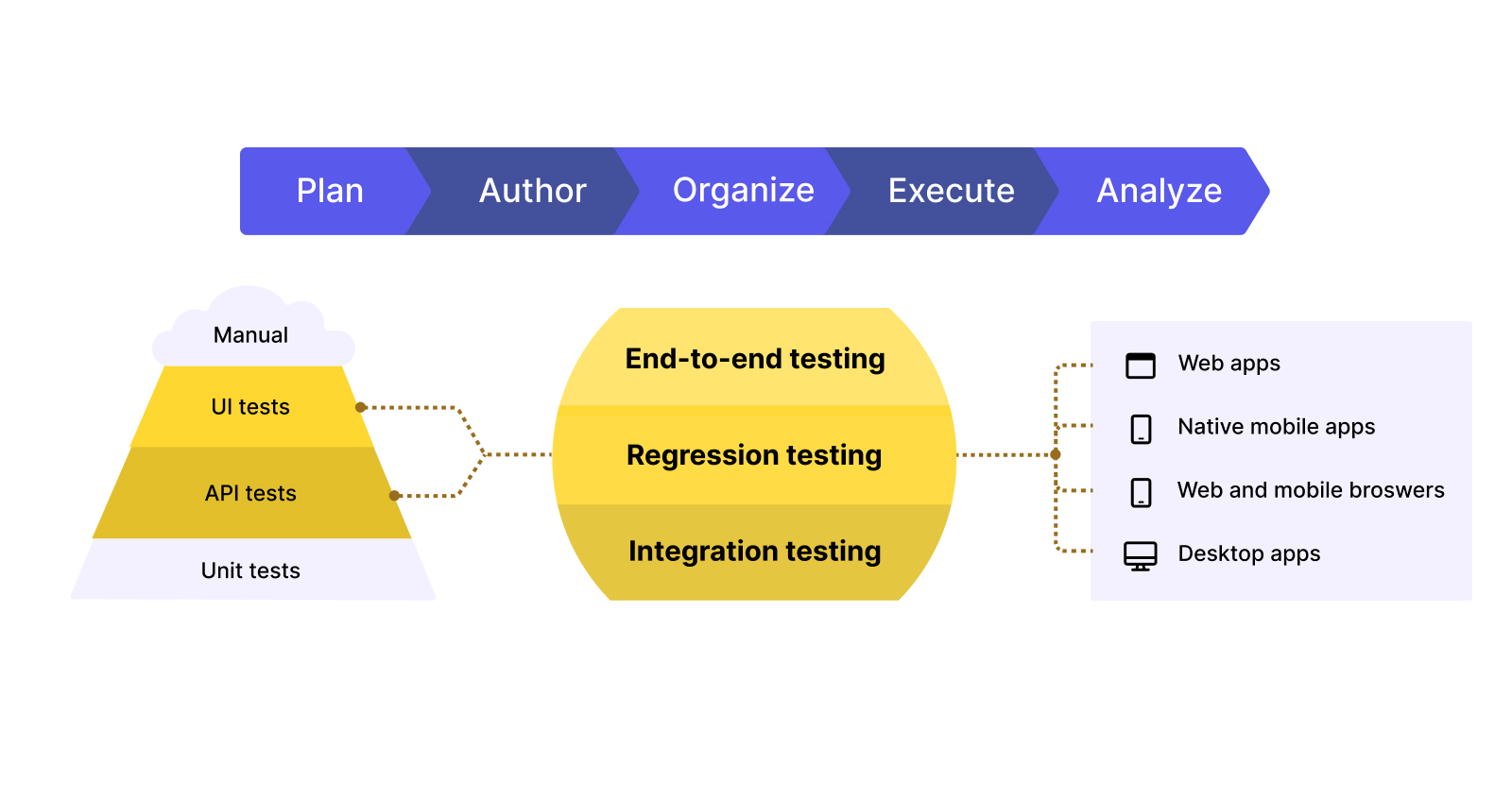
Katalon also offers test management capabilities. Testers can capture application elements and store them in the Object Repository, which is essentially a centralized repository to store test artifacts. These test artifacts, test cases, and data can be shared across team members and reused across projects, improving test reusability.
Curious? See Katalon in action here:
Frequently asked questions
It’s a strategy to move testing into the earliest SDLC stages—requirements and design—so defects are prevented or found sooner, cutting rework cost and speeding delivery.
Earlier feedback, lower fix costs, higher code quality, faster releases, and a competitive edge. Testing happens in parallel with coding instead of after “dev complete.”
Early testing: TDD/BDD during requirements & design. Automation & continuous testing: unit/API/integration tests in CI/CD (e.g., Selenium, Katalon, Cypress). Static analysis: SonarQube, ESLint, Checkstyle to catch issues pre-runtime. Collaboration: devs, testers, business align on goals, tools, and quality.
Transition & project management: plan process changes and foster a quality-first culture. Test planning as ongoing work: keep tight feedback loops. Automation skills & maintenance: invest in scripting know-how or choose fit-for-purpose tools. Developer support & silos: coach on testable code and integrate tooling (e.g., JIRA + test platforms) to reduce handoffs.
Shift-left vs. Continuous testing: shift-left = when (earlier in SDLC); continuous = how often (tests run throughout CI/CD). They complement each other. Shift-left vs. TDD: TDD is a coding practice (write tests before code); it’s one tactic within shift-left. Getting started: involve testers in planning, define shared quality standards, use BDD with JIRA to align scenarios, adopt automation strategically (build vs. buy), and wire tests into CI/CD. (The article notes Katalon supports these with test design, management, CI/CD and collaboration integrations.)





Test everything. Ship with confidence.
From generating test cases to spotting failures, Katalon's AI works across your entire pipeline, automatically.
