


Want a mobile testing job? Learn the typical mobile tester career path, five must-have skills and certifications, the tools to practice with, and where to find open roles, plus interview prep resources.

The mobile app market keeps growing, and so does demand for skilled mobile testers. Companies need testers who can make sure apps work across a wide range of devices, OS versions, and network conditions, and many offer competitive salaries to attract them. If you're looking to move into a mobile testing role, this guide covers what you need to know to get hired and excel.
Most Common Career Path for a Mobile Tester

Building a strong mobile testing career requires solid skills and a willingness to keep up with new technology, testing techniques, and tools. Titles and experience levels vary by company, but a typical career path for a mobile tester looks like this:
# | Role | Typical experience |
|---|---|---|
1 | QA Analyst | Less than 2 years |
2 | Senior QA Analyst | 2 to 3 years |
3 | QA Team Coordinator | 5 to 6 years |
4 | Test Manager | 8 to 11 years |
5 | Senior Test Manager | 14+ years |
5 Must-Have Requirements for Every Mobile Tester
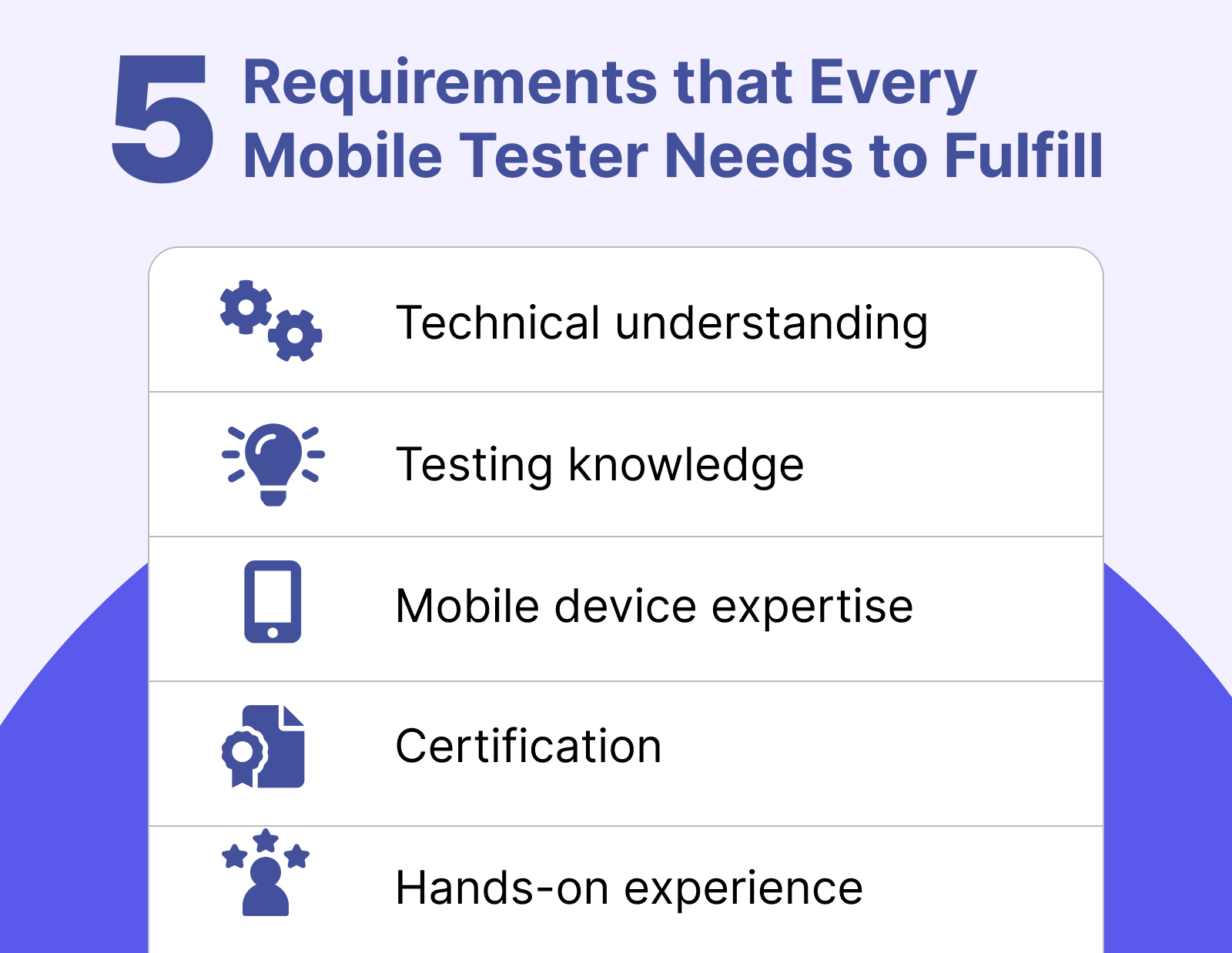
No matter how much mobile testing experience you have, there's always room to grow. Here are five requirements to master as you move forward:
- Technical understanding: To move up the career ladder, you need solid knowledge of mobile testing. Formal training courses and practice writing test cases at different levels of an application are good investments. Familiarity with tools such as Appium and Selenium is a big plus. You should also understand the main development methodologies (waterfall and agile testing), testing methods (white box and black box), and the software development life cycle.
- Mobile device testing expertise: In-depth knowledge of popular devices (such as iPhone, Samsung Galaxy, and Google Pixel) and mobile operating systems (iOS and Android) is a real advantage. Curiosity about new devices, OS versions, and network conditions helps too.
- Certification: Required certifications depend on the employer, but they can help you stand out. Options include the ISTQB Certified Tester Mobile Application Testing (CT-MAT) and the Certified Mobile Application Professional (CMAP) from the International Mobile Testing Qualification Network (IMTQN).
- Hands-on experience: Your experience largely determines the roles you'll be offered, so gain as much practical experience as you can through internships, smaller companies, or personal projects. Joining a thriving testing community is also a great way to keep up with trends and learn from industry experts.
- Communication skills: Mobile testers work closely with developers, designers, and product managers. Writing clear bug reports and explaining issues and risks well makes you far more effective on a team.
Quick review:
Take a Step Forward in Your Mobile Testing Career

Below is some advice that brings you one step closer to your dream job.
- Start creating test cases with popular mobile testing tools: A professional tester should know how to use the main types of mobile testing tools. Here are the categories to include in your checklist:
- Simulators and emulators: A mobile tester should be comfortable with simulators and emulators. They mimic real devices so you can run tests quickly under different conditions, such as locations, bandwidths, and regional settings.
- Automation tools: Automation makes mobile testing faster and increases coverage. It supports regression testing and lets you run tests in parallel on devices with different screen sizes, OS versions, and platforms. Popular options include Katalon Studio, Appium, Espresso (Android), and XCUITest (iOS).
- Network tools: These tools let mobile testers inspect and manipulate network traffic, track the API calls an app makes, and simulate poor or unstable connections. Examples include Charles Proxy, Fiddler, and Apple's Network Link Conditioner.
- Upgrade your skills with different types of testing: Get hands-on experience with a range of testing types, such as manual, exploratory, alpha, and beta testing. Broader experience improves the quality of the apps you test and builds your confidence as a tester.
- Improve your crash and performance analysis: When an app crashes, you should be able to analyze crash reports and pinpoint the cause. Tools such as Firebase Crashlytics, Bugsee, and Dynatrace help collect this data.
Read more: 50+ QA Interview Questions and Answers
Where to Find Mobile Testing Jobs

There are many places to find open positions. Some of them are:
- Job portals: Sites such as Indeed, Glassdoor, Monster, and Naukri list many mobile testing roles.
- Professional networks: LinkedIn is the biggest. Joining mobile testing and QA groups there helps you hear about openings early.
- Company websites: Most companies list openings on their careers page. Search for companies that match your skill set and check their careers sections regularly.
Want to solidify your chance at landing a mobile testing job? Learn how to apply the codeless solution into mobile testing
Conclusion
A successful mobile testing career depends on your knowledge, experience, and skills. Build them by learning testing tools, earning relevant certifications, and getting hands-on experience, then start applying for roles. To prepare for interviews, here are some topic-specific lists of interview questions:
- QA Interview Questions
- Web API Testing Interview Questions
- Mobile Testing Interview Questions
- Software Testing Interview Questions
- DevOps Interview Questions
- Manual To Automation Testing Interview Questions
- 15 Questions to Evaluate Your QA Team's Software Testing Process
- Software QA Engineer Salary Guide
Want to go deeper into mobile testing beyond interview questions? Check out our free Beginner's Guide to Mobile Testing, packed with practical tips to help you get started with confidence.
Frequently asked questions
A common path listed is QA Analyst → Senior QA Analyst → QA Team Coordinator → Test Manager → Senior Test Manager, with increasing years of experience.
Technical understanding of mobile testing, familiarity with methodologies (Agile/Waterfall), testing methods (black/white box), SDLC knowledge, and experience with tools like Appium and Selenium.
It’s highlighted as important to understand a wide variety of devices and operating systems (iOS, Android, Windows, Blackberry, etc.), plus interest in networks/operators.
They can help depending on the recruiter; an example given is the Certified Mobile Application Professional (CMAP) from IMTQN.
By pursuing internships or starting at smaller companies, staying active in testing communities, and building test cases using popular tools like simulators/emulators, automation tools (Katalon Studio, Appium, Selenium, etc.), and network tools.





Test everything. Ship with confidence.
From generating test cases to spotting failures, Katalon's AI works across your entire pipeline, automatically.
