


Sequential testing can bottleneck your DevOps pipeline. Compare traditional and parallel testing, see how running tests simultaneously speeds releases, widens coverage, and cuts costs, and how Katalon TestOps runs suites in parallel.

Parallel Testing vs. Traditional Testing
It is no surprise that the integration of digital technology into all areas of business operations is creating a high demand for software. To increase the effectiveness of their operations, enterprises rely more heavily on software, which means that software is now more complex, and there is little tolerance for failure.
To make sure software is ready to meet business demands, testing validates that it does what it is supposed to do. However, while testing improves DevOps outcomes, it can be costly if enterprises don’t choose the right testing framework.
Traditional testing frameworks and methodologies have come a long way since their inception. However, they can become a bottleneck in the DevOps pipeline.
Parallel testing is a methodology where DevOps teams can use available resources more effectively and accelerate releases, translating into better software and more profits.
This article discusses traditional and parallel testing methodologies, compares their main differences, and offers best practice tips to improve your modern test automation pipelines.
A Brief Recap of Testing Frameworks
For more than two decades, several testing frameworks have made their way through the environments of software testers and developers.
Traditional testing is a fundamental part of the waterfall approach to software development. This method calls for a team of testers to work on early internal releases of software products to identify issues and then provide feedback to developers to fix the issues. The same cycle is done multiple times before the product is signed off for release. This process is slow, error-prone, costly, and doesn’t scale well.
The widely adopted manual testing approach, alongside the lack of automation, can let issues slip into production. The evolution of software development, moving from waterfall methodologies to the more efficient agile approach, has propelled automation testing to the forefront to address increasing scale, frequency, and breadth of testing throughout the development pipeline.
Test automation can be helpful, but it can also be a costly investment if it is not implemented to make effective use of existing resources.
What is Parallel Testing and Its Benefits?
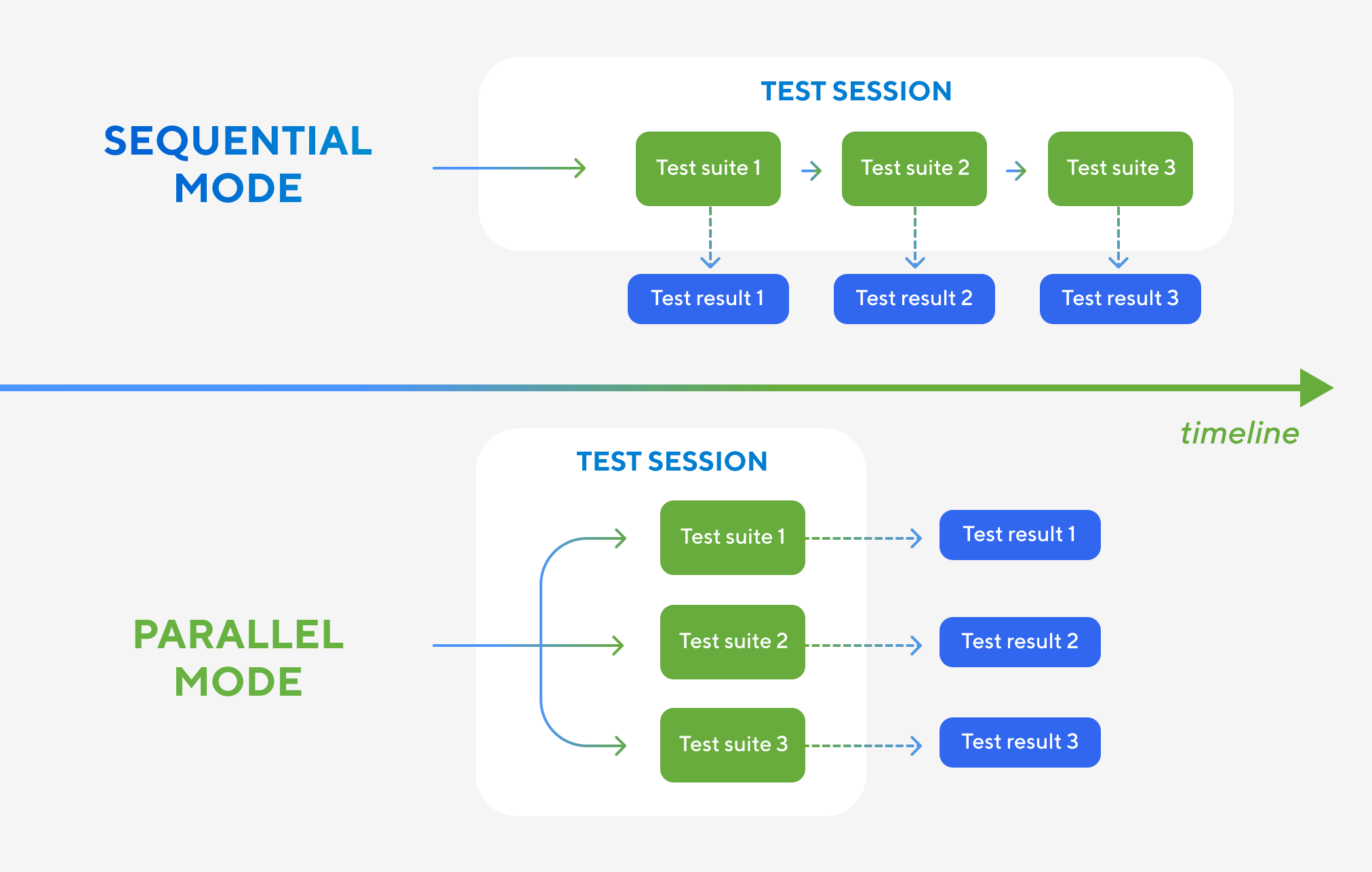
Parallel testing is the process of running multiple automated tests simultaneously. Unlike in traditional sequential testing processes, where each test has to be executed one at a time, parallel testing runs your tests at the same time to:
- Accelerate your release cycles, allowing you to deliver faster and more accurate results with minimal effort
- Enhance test coverage by allowing you to distribute multiple test suites across available test environments, minimizing the risk of releasing software without properly testing for all the potential outcomes
- Reduce execution costs by using your resources more efficiently. With parallel testing, you can anticipate what resources you will need with more accuracy, allowing you to properly size your environments and release them once all tests have been completed
- Optimize your CI/CD pipeline by identifying problems sooner and reducing wait times
- Minimize effort by reusing testing scripts. With parallel testing, you can create one test suite and run it on multiple devices instead of having to create a new script for each test scenario
Read More: What Is Regression Testing?
Parallel Testing With Katalon TestOps: A Faster Path to Release
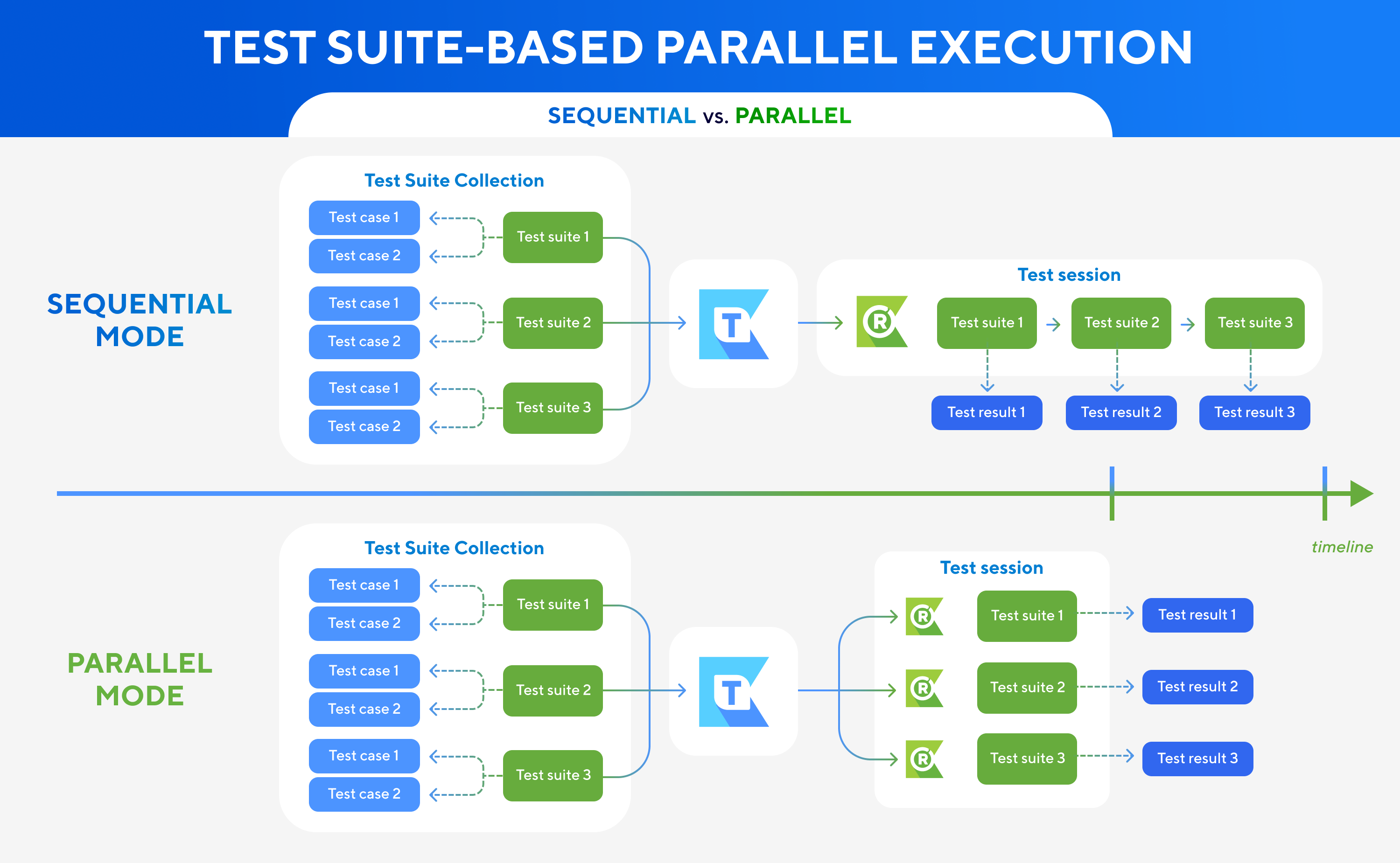
The April 2021 release of Katalon TestOps introduced the ability to run test suites in parallel, eliminating the need to run test suites in sequential mode and optimizing continuous testing for a faster and more efficient test cycle. TestOps’ parallel execution enables you to:
- Distribute multiple test suites across available test environments
- Reduce execution time
- Deliver faster and more accurate results with minimal effort
Conclusion
Using parallel execution in test automation pipelines not only allows developers and testers to create a more efficient CI/CD pipeline, but also helps minimize risk, effort, and cost. Check out the TestOps documentation for more information on running multiple test suites in parallel across different environments.

×
Frequently asked questions
Traditional testing runs suites sequentially - one after another - so feedback is slow and execution time grows linearly. Parallel testing executes multiple automated suites at the same time, shrinking total runtime, surfacing defects sooner, and better fitting fast CI/CD cycles.
It accelerates releases, boosts coverage across browsers/devices/OSes, lowers infrastructure cost by using environments efficiently, reduces queue time in pipelines, and lets you reuse the same scripts across many targets simultaneously.
Large regression suites that block releases Cross-browser/device matrices Frequent builds in Agile/DevOps pipelines Teams constrained by long feedback loops from sequential runs
TestOps lets you distribute multiple test suites across available environments and run them concurrently, cutting execution time while aggregating faster, more accurate results for continuous testing and release readiness.
Make suites independent (no shared state/data collisions). Externalize test data and use isolated environments. Tag and shard suites logically (e.g., smoke/regression by platform). Right-size infrastructure based on expected parallelism. Wire parallel runs into CI/CD so failures surface early with clear reports (via TestOps).





Test everything. Ship with confidence.
From generating test cases to spotting failures, Katalon's AI works across your entire pipeline, automatically.
