


Manual testing slows insurance releases and adds compliance risk. Here's how to make the business case for test automation, with ROI and real results.
Insurers need to ship reliable software quickly. Policy updates, claims processing, and regulatory compliance all need precision and speed, and manual testing alone causes delays, errors, and risk.
Test automation helps. It takes over repetitive regression tests, makes compliance checks consistent, and gets new products to market sooner.
This guide covers:
- Why manual testing is costly and risky in insurance software
- How automation supports compliance and risk management
- How to measure the ROI of test automation
- Real results from insurance teams
- How to build a business case executives will back
- What to look for in an automation tool for a regulated business
Whether you run QA for insurance apps or are weighing compliance testing automation, this guide will help you make the case.
The cost of manual testing in insurance

Manual testing in insurance apps takes a lot of time and effort. Every release, whether a new policy or a pricing update, triggers a regression cycle. When those tests are manual, the cycle can take weeks, launches slip, and teams work long hours re-checking features that already exist.
Human error is another risk. Compliance-heavy workflows like claims processing and underwriting checks depend on running the same steps the same way every time. Manual runs make mistakes more likely, and auditors may ask for extra verification.
Picture a claims processing system. Each release, the QA team spends 2 to 3 weeks re-running regression tests on policy rules, payment calculations, and claim approvals. The testers are careful, but the work takes heavy coordination and a lot of repeated effort.
- Time delays: manual regression testing slows releases.
- High effort: QA teams spend days or weeks re-running existing test cases.
- Compliance exposure: human mistakes can affect audit readiness and regulatory reporting.
Automation cuts that manual effort, speeds up regression cycles, and runs every check the same way, so testers can focus on the work that needs their judgment.
Compliance and risk management through automation

Automated tests create an audit trail as they run. Each run is logged with its results, so teams can show auditors what was tested, when, and with what outcome.
Automation also keeps claims, underwriting, and policy management tests consistent. Each test follows the same steps every time, which reduces errors and builds confidence in quality.
Non-compliance is expensive. Fines, legal fees, and damage to reputation all add up. One study found that the cost of non-compliance averages 2.7 times the cost of maintaining compliance.
- Faster audits: automated logs make inspections quicker and more accurate.
- Consistent processes: every test runs the same way across insurance apps.
- Lower risk: fewer manual steps means less operational and regulatory exposure.
With compliance checks built into automated testing, teams move from reacting to issues to preventing them. Learn more in how to scale QA in insurance enterprises.
The ROI of test automation for insurers
Test automation delivers business value you can measure. Shorter regression cycles mean new products and policies reach customers sooner, without weeks of manual checks.
Compliance work gets faster too. Deloitte notes that regulatory technology can cut compliance costs by automating reporting and checks. When test evidence is collected automatically, audit preparation takes less time and becomes predictable.
QA teams also do more with the same headcount. Repeat checks run on their own, so testers can focus on edge cases and exploratory testing.
You can estimate the impact with a simple formula:
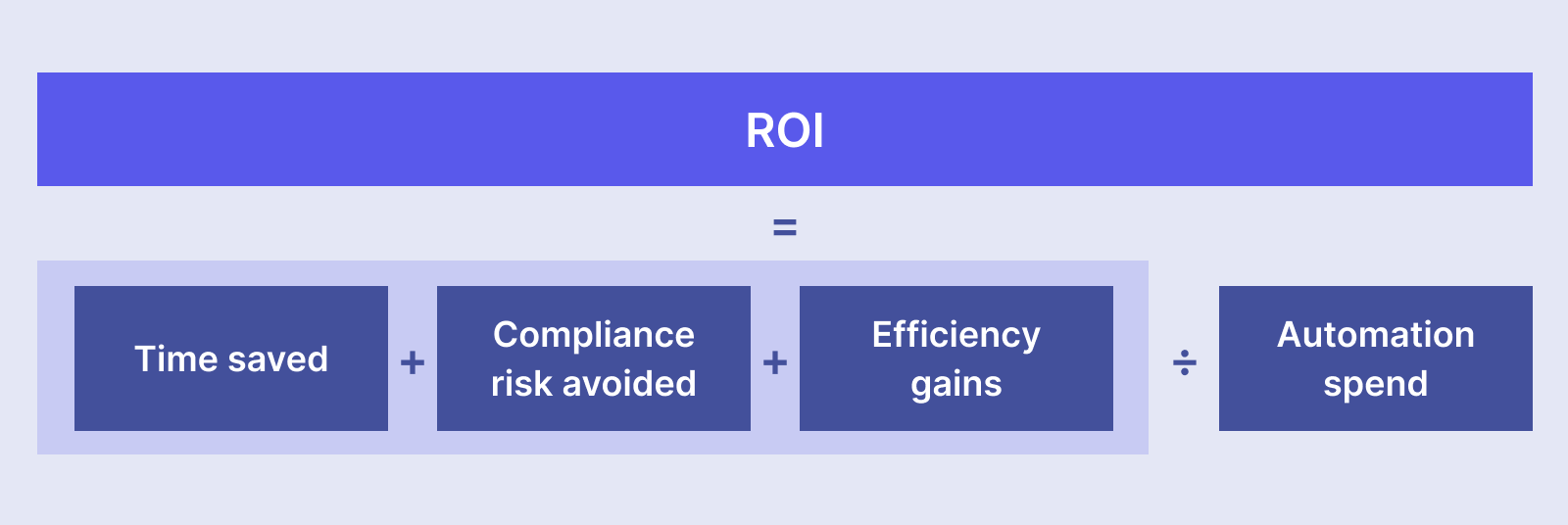
Measure ROI in time saved, compliance risk avoided, and efficiency gained, so executives see both the financial and operational benefits. For a step-by-step method, see how to calculate test automation ROI.
Results from insurance teams using Katalon
Insurance teams use Katalon to shorten release cycles and support compliance without growing their QA teams.
- Saga (UK): Saga's QA team used Katalon's low-code tools to automate policy and claims testing without deep coding skills. They tripled testing capacity, moved from about 30 manual scenarios to at least 100 per product per release, and cut regression testing from two days to two hours.
- An insurtech platform: working with KMS Technology, this insurtech team cut testing cycle time by 75%, reached 90 to 95% automated coverage, and reduced production defect leakage by 60%.
Results like these are strong proof points for any business case.
How to build a business case for test automation in insurance
Start with the pain points that cost the business money:
- Compliance costs
- Delays from manual testing
- Operational risk
Each has a measurable impact, which helps executives see the value of automation.
Next, map the benefits of automation to business outcomes:
Benefit | Business outcome |
|---|---|
Consistent compliance testing | Lower audit risk and fewer fines |
Shorter regression cycles | New policies and features reach customers sooner |
More reliable insurance software | Higher customer trust |
Finally, tell the ROI story in terms the CFO and board care about. Quantify time saved, compliance risk avoided, and efficiency gained, then connect those numbers to revenue, cost savings, and lower risk.
What to look for in an automation tool for regulated industries
The right tool matters in insurance. Look for:
- Traceability: link tests to requirements, so you can show what's covered.
- Detailed reporting: keep run history and results that auditors can review.
- Version control: track every change to test scripts.
- Integrations: connect to your CI/CD pipeline and test management tools.
- Low-code authoring: let testers without deep coding skills build and maintain tests.
These features keep testing auditable, consistent, and visible to stakeholders. Katalon True Platform covers them in one place: test creation in Katalon Studio, and reporting and traceability in Katalon TestOps.
To compare options, see our guide to test automation tools.
Conclusion: QA drives compliance and growth
Insurance QA protects compliance, builds customer trust, and speeds up delivery. Each automated test supports regulatory requirements and checks that software works for customers. Automation turns QA from a cost center into a source of business value.
Test automation gives you testing that scales. Teams run regression tests quickly, keep audit-ready records, and release new policies and features with confidence.
Evaluate automation ROI alongside your compliance and delivery KPIs. Tying automation to business outcomes shows its value and lowers risk.
Frequently asked questions
Manual regression cycles can take weeks, which delays releases. Compliance-heavy workflows like claims and underwriting also depend on consistent execution, and manual runs make human error more likely.
Automated tests follow the same steps every time and log their results. That gives you an audit trail showing what was tested, when, and with what outcome.
Compare the time and cost of manual testing with the cost of building and maintaining automation. Include time saved per release, compliance risk avoided, and the extra coverage your team gets with the same headcount.
Look for traceability, detailed reporting, version control, CI/CD integrations, and low-code authoring, so tests stay auditable and more of the team can contribute.





Test everything. Ship with confidence.
From generating test cases to spotting failures, Katalon's AI works across your entire pipeline, automatically.
